Zhejiang Shenda Printing Machinery Co., Ltd
+86-577-65515888

Among them, the safety screw, infrared, two hand linkage operation and electronic knife lock greatly enhance the safety performance.

Your Leading Zhejiang Shenda Printing Machinery Co., Ltd. Supplier


Zhejiang Shenda Printing Machinery Co., Ltd. in China's production base of printing and packaging machinery - Ruian City, Zhejiang Province, is a research, production, sales, service, and export as one of the high-tech machinery and equipment manufacturers.


Why Choose Us
 

High quality
The company relies on complete mechanical processing equipment, improve process design, introduction of modern high-tech home and abroad.


Competitive price
We offering a higher-quality product or service at an equivalent price. As a result we have a growing and loyal customer base.


One-stop solution
If there is something goes wrong , you can call us ,video-chat ,email us .and we will give solutions within 36 hrs.


Technical support
We have 2,000 technical team and 6,000 obtain patent.

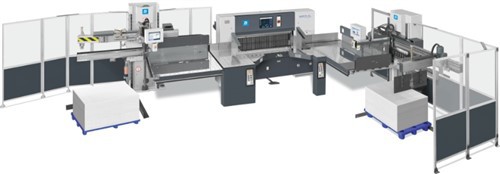
Cutting System of Stack Loader


What is Cutting System

A cutting system is a machine that is used for separating materials. Thereby a variety of materials, such as aluminium, tin, steel (even hardened steel), titanium, wood, ceramics or plastics, can be separated or cut in certain forms.

In cutting systems, one can distinguish between two different procedures: Abrasive cutting machines working with physico-chemical separation processes (laser, plasma and flame cutting) and metal-cutting machines that cut through the workpiece by means of a high pressure jet (water jet cutting).


Benefits of Cutting System


Less material waste

Cutting system significantly reduce material waste. Handheld cutting requires extensive training and skill to avoid errors that can result in wasted materials and financial loss. In contrast, cutting system ensure precise cuts, minimizing waste and maximizing cost-efficiency.

01

Fast and accurate cutting

Cutting system is their ability to deliver fast and accurate cuts. Controlled by sophisticated software and cnc controllers, these machines provide precise cutting results with minimal errors. Whether cutting intricate designs or simple shapes, cutting system offer unparalleled speed and accuracy.

02

Increased productivity:

Cutting system significantly increase productivity in workshops. With faster cutting speeds and precise automation, these machines enable workshops to produce more components in less time. This increased productivity leads to improved efficiency and profitability for businesses.

03

Enhanced safety

Cutting system are equipped with advanced safety features to protect operators and minimize the risk of accidents. From automatic torch height control to safety interlocks, these machines prioritize operator safety without compromising cutting performance.

04


Types of Cutting System


Laser cutting
Laser cutting is to use the focused high-power density laser beam to irradiate the work-piece, so that the irradiated material quickly melts, vaporizes, ablates or reaches the ignition point, and at the same time, the molten material is blown away by the high-speed airflow coaxial with the beam, so as to cut the work-piece. It belongs to thermal cutting.


Water jet cutting
Water jet cutting, also known as water knife, refers to high-pressure water jet cutting technology. It is a machine that uses high-pressure water flow to cut. It can be divided into two ways: non sand cutting and sand adding cutting. water jet cutting can be controlled by computer to carve any work-piece, and it is less affected by the material texture, and will not generate a lot of heat like other cutting methods.


Plasma cutting
Plasma cutting is a machining method that uses the heat of high-temperature plasma arc to locally melt (and evaporate) the metal at the work-piece notch, and uses the momentum of high-speed plasma to remove the molten metal to form a notch.


Wire electrical discharge machining
The full name of wire electrical discharge machining is wire electrical discharge machining, which belongs to the category of electrical machining. wire electrical discharge machining can be divided into fast wire electrical discharge machining, medium wire electrical discharge machining and slow wire electrical discharge machining according to the different wire speed. The wire speed of fast wire EDM is 6 ~ 12m / s, the electrode wire moves back and forth at high speed, and the cutting accuracy is poor. Medium wire EDM is a new technology developed in recent years, which realizes frequency conversion multiple cutting function on the basis of fast wire EDM. The wire speed of slow wire EDM is 0.2m/s, and the wire electrode moves at low speed and unidirectionally, so the cutting accuracy is very high.


Application of Cutting System
 
The aerospace industry

Laser cutting is very applicable in this field. However, unlike the automotive sector, everything has to be done on a much larger scale, and products must withstand much more pressure. As a result, the processes involved must be even more precise and reliable.

To design jet engine and turbine blade components, we can use waterjet cutting, as well as composite materials for aircraft. Indeed, high-pressure water combined with an abrasive water jet makes extremely precise cuts necessary for aircraft fuselage, tail, and wings, or even rotating blades.

The automotive industry

The automotive industry uses water jet cutting to make headliners, door panels, and carpeting. The machines create smooth, flat, and deburred surfaces, even when the materials are not uniform, leaving no rework.

Automobile manufacturers may prefer laser cutting for very small and complex parts and components, such as openings for antennas. This technology can also be used to cut materials such as fabric for airbags. By melting the edges at a very high speed, no fraying remains. The laser can also cut composites, which is useful for interior parts.

The food industry

Water jet cutting has significant time-saving advantages that are very precious to the food industry. There is no need to change knives or sharpen the blades since the cutting is done with pure water. This technology has enabled bakeries to double their output. The absence of blades promotes a healthy, sanitary cutting environment without the risk of contamination. In addition, the machine tool is easy to use, which promotes its democratization. Its fineness of cut has thus become widespread in the sector and brings added value to products whether fruit or vegetables, meat or pastries.

The electronics industry

As the world becomes more and more digital and technological, there is a growing need to develop electronic parts and products. As technologies progress, electronic objects become smaller and smaller, for example, computers or smartphones. Products adapt, as do manufacturing processes. Laser cutting is used primarily because of its ability to segment tiny and complex parts.


Components of Cutting System
 

Power supply, cutting tool, and consumables – As the name implies, the power supply — whether plasma, laser, or waterjet — is what actually powers your cutting system. It provides the energy and wattage needed to move your cutting tool, whether that tool is a torch or a cutting head. Your torch or cutting head is your systems’ arm and hand. It is what actually does the cutting. Finally, your consumables are the items inside your cutting tool that wear out with use such as the copper nozzle in a plasma torch or the diamond orifice in a waterjet cutting head.


Cables and wiring – All cutting tables have wires and cables that connect the CNC to the power supply and other system components.


Drive motors and gear rack – Moving the cutting tool up, down, and around the table requires the use of drive amplifiers, motors, and a gear rack that translate commands from the CNC into physical motion.


Table frame and slats – The table frame and slats physically support the movement of the cutting tools.


Height control (THC) – The height control (or, more commonly, Torch Height Control) ensures that the cutting tool doesn’t get too close or far from the work piece.


Process of Cutting System

Material preparation

Before the cutting process, the required materials need to be prepared. This includes selecting the appropriate material type and size, and checking and confirming to ensure that the material is not damaged or defective.


Cutting equipment selection

According to the material type and size, select the appropriate cutting equipment. Common cutting equipment includes manual cutting machines, CNC cutting machines, laser cutting machines, etc. Choosing the right equipment can improve cutting efficiency and accuracy.

Cutting parameter setting

Before cutting, it is necessary to set the appropriate cutting parameters according to the material type and thickness, including cutting speed, cutting pressure, cutting angle, etc. Setting the appropriate cutting parameters can ensure a smooth and effective cutting process and avoid material damage or unsatisfactory cutting results.

Cutting process control

During the cutting process, it is necessary to operate according to the instructions of the cutting equipment and control the cutting process. This includes using the operating buttons and control panel of the cutting equipment to control the cutting speed and pressure to ensure a smooth and accurate cutting process. ‌

Subsequent processing

The cut materials need to be processed, including cleaning, trimming and inspection. Cleaning can remove the debris and residues generated during the cutting process, trimming can make the cutting edge flatter and smoother, and inspection can ensure that the cutting results meet the requirements.


How to Maintain Cutting System


Cutting tool inspection and monitoring
Regular inspection and monitoring of your cutting tools are essential to maintaining optimal performance and detecting wear or damage early. Thoroughly inspect each tool before and after use, checking for signs of wear, such as edge chipping, flank wear, or built-up edges. Use magnifying instruments, such as a microscope or loupe, for a more detailed inspection.


Tool cleaning and maintenance
Proper tool cleaning is a vital factor in maintaining functionality and extending the life of cutting tools. After each use, remove debris and coolant residues using appropriate cleaning solutions and soft brushes. Avoid using abrasive materials that could damage the tool surface or harm protective coatings.

For coated cutting tools, pay special attention to the coated surface to prevent damage or corrosion. Using ultrasonic cleaners can be an effective method for removing debris from intricate areas without damaging the tool surface or coating.


Adequate storage and handling
Proper storage and handling of cutting tools can significantly impact their longevity and performance. Store cutting tools in dry, temperature-controlled environments to prevent rust and corrosion. Use well-organised tool holders, cabinets, or protective sleeves to prevent accidental damage and make it easy to locate each tool.

When handling cutting tools, exercise caution to avoid dropping or striking them against hard surfaces, as this may result in edge chipping or other damage. Furthermore, take care when mounting and dismounting tools from their holders to prevent undue stress on the tool shank or cutting edges.


Correct tool selection and application
Optimising tool selection and application for your specific machining process can significantly prolong cutting tool life. Ensure you choose the appropriate tool material, geometry, and coatings to match the workpiece material, machining parameters, and desired surface finish. Consult cutting tool manufacturers’ guidelines to determine the recommended cutting speeds, feed rates, and tool holding methods.

Using cutting tools outside their intended application or operating parameters can result in accelerated wear, tool breakage, or diminished performance. Furthermore, be mindful of reusing worn or damaged tools, as this may negatively affect your machining process and cause additional tool wear or damage.


Proper coolant management
The use of coolants and lubricants in your machining process can significantly impact cutting tool life, as they reduce friction, heat generation, and tool wear. Select the appropriate coolant or lubricant for your application, considering factors such as the workpiece material, cutting tool material, and machining parameters.

Regularly monitor your coolant supply, checking for water-to-coolant ratio, pH levels, and contamination. Ensure your CNC machine’s coolant system is properly maintained, with filters cleaned and replaced regularly, to avoid insufficient coolant flow or reduced cooling efficiency.


Sharpening and tool regrinding
When cutting tools become worn or dulled, resharpening or regrinding can effectively restore their performance and extend their life, saving you money on replacement tools. Invest in proper tool grinding and sharpening equipment or utilise professional tool regrinding services to ensure your tools are sharpened accurately and effectively.

Before resharpening, it’s essential to determine if the tool has reached its maximum allowable wear limit or is still salvageable, as excessively worn tools may not be suitable for restoration. Additionally, take caution when regrinding coated cutting tools, as the process can remove the protective coating from the cutting edge.


Adapting cutting strategies
Modifying your cutting strategies can significantly influence the lifespan and performance of your cutting tools. Techniques such as trochoidal milling or high-speed machining can prevent excess tool engagement and heat generation, reducing tool wear and enabling higher cutting speeds.

Moreover, proper programming of CNC machines to minimise abrupt tool path changes, rapid plunging, and excessive cutting forces can improve tool life and reduce the likelihood of tool breakage.


Employee training and awareness
Ensuring your operators and employees understand the importance of cutting tool maintenance and proper application is critical to prolonging tool life and maintaining performance. Provide adequate training on tool handling, maintenance, and inspection procedures, as well as best practices for machining each specific workpiece material.


Advancements in Cutting Technology


Blades. The continuing development of saw blade technology is expanding applications for sawing. Many saw, shear, and rotary blades are being constructed of high-strength steels. Some are coated to extend blade life, to maintain hardness, and to resist softening from the heat generated during the sawing process. In some applications, blades are carbide-tipped to improve performance.


Automation. Today's high-production demands and the need for higher-quality parts have led to a trend toward more automation. It may not be cost-effective anymore to cut parts on one machine and manually transfer them to a secondary operation. Automated material handling equipment handles tubing at high speeds, automatically loads tubing into cutting or secondary operations, and stacks the tubing into bins or bundles.


Servos. New supported shear cutting machines load tubing into the cutoff machine with a servomotor in a gripper assembly.


Integration. Inline automation has been developed to integrate cutoff machines with secondary operations such as wire-brush deburring and end finishing. With integrated systems, production speeds of more than 5,000 finished tubular parts per hour are possible.


productcate-1-1


Our Factory

Professional production of paper cutter, cutting system, creasing and cutting machine, computer bronzing die-cutting machine four series of printing machinery products, the company relies on complete mechanical processing equipment, improve process design, high-quality personnel requirements, introduction of modern high-tech home and abroad, to develop collection "optical, mechanical, electrical, hydraulic," as one of a series of products.


Our Certificate
 

productcate-1-1

productcate-1-1

productcate-1-1

productcate-1-1


FAQ
 

Q: What is the cutting process?

A: Cutting is a technique where the operator moves a material (workpiece) such as metal and the tool in relation to each other in order to shape the workpiece into the desired form through shaving, drilling, etc.

Q: What do cutting machines do?

A: Die cutting machines or card making machines are machines that cut shapes out of paper, chipboard (like cardboard but thicker and more dense), fabric, and other materials.

Q: What is the cutting method?

A: The cutting method is based on similar principles to those in the hole-drilling method. Once more, stress is relaxed by the removal of material. This time a notch is removed from a specimen, resulting in the creation of a free edge.

Q: What machine is used for cutting?

A: Bar-cutting machines are used for cutting metal bars, rods, and tubes for construction, manufacturing, and engineering applications. They can be used to cut a variety of materials such as steel, brass, and aluminium in both round and square shapes.

Q: What is the purpose of the cutting process?

A: Cutting process refers to a process that modifies the shape of a solid object by mechanically separating material in the form of chips using cutting tool edges.

Q: What is the function of cutting?

A: Cutting has been at the core of manufacturing throughout history. For metals many methods are used and can be grouped by the physical phenomenon used. It is the process of producing a work piece by removing unwanted material from a block of metal, in the form of chips.

Q: What is the most common cutting tool?

A: Drill
Drill. A drill is a cutting tool that pierces a hole in a workpiece, which has a cutting edge at the tip, and a groove in the body for discharging chips. It is the most common tool among cutting tools, with various shapes and types for application, from the one used at home to the one for special processing.

Q: What is the basic cutting process?

A: Cutting processes work by causing fracture of the material that is processed. Usually, the portion that is fractured away is in small sized pieces, called chips. Common cutting processes include sawing, shaping (or planing), broaching, drilling, grinding, turning and milling.

Q: What cutting method is the most accurate?

A: Laser cutting
Laser cutting stands out for its exceptional precision and versatility. It uses a high-powered laser beam concentrated on a small area of the steel, melting and cutting through the material with remarkable accuracy.

Q: What is the basic principle of cutting?

A: According to the cutting principle, the cutting edge should be located on the conjugate surface of the theoretical tooth surface. In tool design, the conjugate surface is calculated first, and then the cutting edge is selected from the conjugate surface.

We're well-known as one of the leading cutting system manufacturers in China for 35 years. If you're going to buy high quality cutting system for sale, welcome to get more information from our factory. For price consultation, contact us.

Cutting System For Large Paper Cutting Machine, Cutting System, High Speed Paper Cutter System

(0/10)

clearall