Zhejiang Shenda Printing Machinery Co., Ltd
+86-577-65515888

Your Leading Zhejiang Shenda Printing Machinery Co., Ltd. Supplier


Zhejiang Shenda Printing Machinery Co., Ltd. in China's production base of printing and packaging machinery - Ruian City, Zhejiang Province, is a research, production, sales, service, and export as one of the high-tech machinery and equipment manufacturers.


Why Choose Us
 

High quality
The company relies on complete mechanical processing equipment, improve process design, introduction of modern high-tech home and abroad.


Competitive price
We offering a higher-quality product or service at an equivalent price. As a result we have a growing and loyal customer base.


One-stop solution
If there is something goes wrong , you can call us ,video-chat ,email us .and we will give solutions within 36 hrs.


Technical support
We have 2,000 technical team and 6,000 obtain patent.

First 12 Last 1/2
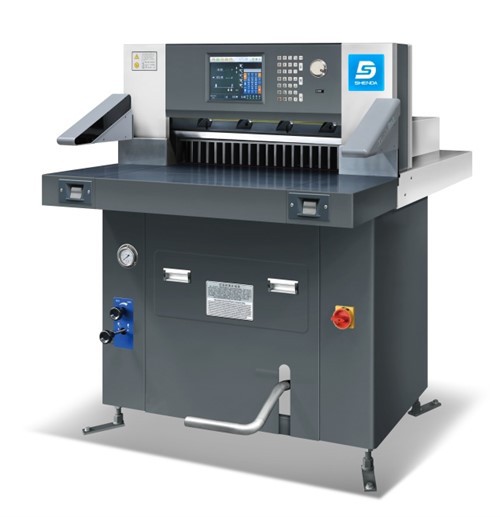
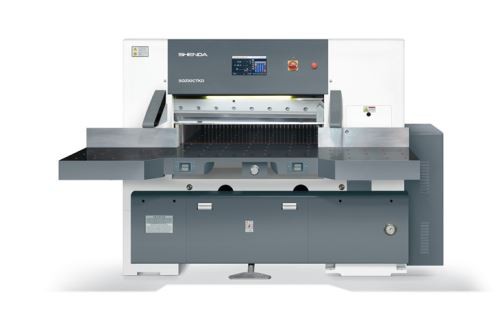
Large Double Hydraulic Paper Cutting Machine


What is Small Paper Cutting Machine

A paper cutting machine is an essential tool in many industries. From publishing houses to printing companies, this piece of equipment is vital to the accuracy and consistency of paper cutting tasks. These machines are designed to cut large stacks of paper at once, increasing efficiency in tasks that require paper cutting. Their main function is to cut a set of papers into smaller sizes according to the user's preferences and needs. They offer precise cutting and can accommodate different paper sizes. For businesses that deal with thick cardboard and printing paper, a paper cutter machine is a good choice.


Benefits of Small Paper Cutting Machine


Precision

Paper cutter machines are designed to make accurate cuts, ensuring that paper is trimmed to the exact size required. This can be especially important in businesses like printing shops, design studios, or offices where precise measurements are essential.

01

Efficiency

Using a paper cutter machine can save time and effort compared to cutting paper manually with scissors or other tools. This can be particularly beneficial in high-volume environments where large quantities of paper need to be cut quickly.

02

Consistency

Paper cutter machines can help maintain consistency in the size and shape of the paper being cut. This is important for projects that require uniformity, such as bookbinding, crafting, or making promotional materials.

03

Safety

Paper cutter machines are designed with safety features to help prevent accidents and injuries during use. They often have safety guards and mechanisms to protect users from the sharp blades.

04

Versatility

Many paper cutter machines can handle various types of paper, including cardstock, photo paper, and laminated paper. This versatility can be beneficial for users who work with different materials.

05


Types of Small Paper Cutting Machine
 

Rotary paper cutter: This type of paper cutter uses a round blade that sits on a cutting head, which sits on a rail to slide back and forth, cutting paper. Rotary paper cutters are preferred for their extreme precision. They are much used to cut photographs.


Stack paper cutters: Stack paper cutters are designed to cut hundreds of sheets of paper simultaneously. They are commonly used at print shops for cutting down prints and other materials. They can cut larger sheets of paper into custom-size paper. Stack cutters are used for various industrial and commercial applications. Manual, semi-auto and fully automatic variations of the machine are available in the market.


Guillotine paper cutters: They are also known as arm or lever cutters as they typically consist of a cutting blade and a long blade arm that can be pulled down for cutting material. These cutters are generally very accurate in cutting paper, card stock, etc.


Hydraulic paper cutters: The toughest and most robust paper cutter would be a hydraulic one. These cutters typically come in a stack paper cutter design and are used for high-volume cutting in factories, print shops, paper plants, and other businesses that handle thousands of sheets of paper per day.


Form cutters: Form cutters, which are also called paper slitters, are designed to auto-feed paper and slit it down to size, they offer an option of scoring and perforating along with slitting. Form cutters are excellent for producing marketing material.


Application of Small Paper Cutting Machine


Print shops

Stack cutters can seamlessly cut large stacks of paper, making them ideal for print shops that frequently handle large volumes of printing.


Schools

Rotary cutters are a great choice for schools, ensuring professional results and complete safety.


Home offices

Manual guillotine trimmers are lightweight and easy to use, making them the perfect choice for a home or small office.


How to Maintain Small Paper Cutting Machine
 
Keep the knife sharp

The most important feature of any paper-cutting machine is its blade. Therefore, it is super important for the maintenance of the apparatus to involve keeping the blade as sharp as possible. This is because the sharper the blade is, the more accurate and smooth the cut will be.

Oil them properly

Newer paper cutters tend to have their own oiling systems. However, older models will need regular oiling to ensure that they always stay in good condition. Oiling regularly will help to increase the lifespan of your paper cutter, and will assist organizations in getting more out of their investments.

Regularly clean after use

Cleaning a guillotine paper cutter after use is incredibly important. This is because if the machine is unkept, and a build-up of old cuttings forms, you could start to see your machine becoming more and more inaccurate. Making sure your paper cutter is clean will help to keep its accuracy and efficiency.

Learn operating instructions by heart

If a user does not fully understand how to use any paper-cutting machine, then this is where accidents and inaccuracies can creep in. Knowing exactly how to use a machine is important to helping to not only keep its effectiveness, but also to adhere to health and safety practices.

Never use more clamp pressure than is needed

If you are applying too much pressure through your clamp, then you could start to see a reduced force available for cutting. Therefore, it is important to find the correct balance and pressure needed.


Historical Overview


Historical records agree that paper cutters have been around since the late 1830s. The initial design, made by an inventor named Thirault, had a single core component: a fixed blade placed on a flat surface.


However, paper cutters that bear semblances of the modern ones we have today were only developed and patented in 1844 and 1852 by French inventor Guillaume Massiquot. Massiquot’s design was modeled after the structure of guillotines--tools that were originally designed for execution purposes during the French revolution.


Since Massiquot’s design came out, various improvements were done over the years, especially by inventors from Germany, England, and the USA. Also, following the development of different paper designs and formats--including special papers, cardboards, large-format papers, and the like--designers and manufacturers created cutters and trimmers than can accommodate different paper types and sizes with ease.


How Commercial Paper Cutting Machines Work

Commercial paper cutting machines are designed to make the paper cutting process faster, more accurate, and more efficient. These machines are equipped with sharp blades that are capable of cutting through stacks of paper with ease. The cutting process is automated, eliminating the need for manual cutting and reducing the risk of human error. Most commercial paper cutting machines come with a variety of cutting options, allowing you to customize the size and shape of the paper according to your specific needs.


To operate a commercial paper cutting machine, simply place the stack of paper on the machine’s cutting platform and adjust the cutting settings. The machine will then automatically feed the paper into the cutting area and make clean, precise cuts. Some advanced models even come with computerized controls and programmable settings, further enhancing the accuracy and efficiency of the cutting process.

High Speed Double Hydraulic Paper Cutting Machine


Double Hydraulic Paper Cutting Machine

How to Choose the Right Paper Cutter

When choosing the right paper cutter, there are several factors to consider:


Cutting capacity: Consider the maximum number of sheets of paper the cutter can cut at once. Choose a cutter that can handle the volume of paper you will be cutting.


Cutting size: Consider the maximum length and width of paper the cutter can handle. Choose a cutter that can accommodate the size of paper you will be cutting.


Blade quality: Look for a cutter with a high-quality blade that will remain sharp over time. Consider the material of the blade and the ease of sharpening or replacing it.

Safety features

Look for a cutter with safety features such as a blade guard, finger guard, and paper clamp to prevent injury.

Ease of use

Look for a cutter that is easy to use, with simple and intuitive controls.

Portability

Consider if the cutter needs to be portable or if it will be used in a fixed location. Choose a cutter that is suitable for your needs.

Brand and warranty

Consider the brand and warranty of the cutter. Choose a reputable brand with a good warranty to ensure that the cutter is durable and reliable.


Common Malfunctions and Repairs with Parts Replacement

Here are some common malfunctions and how to resolve them:

Dull blade: A dull cutting blade can result in rough and uneven cuts. Replace the blade with a new one to have clean and precise cuts.

Blade misalignment: If the blade is not aligned properly, it can cause inaccurate cuts. Use blade setting gauges to align the blade correctly for precise cutting.

Paper clamp malfunction: The paper clamp may fail to secure the paper, leading to slippage during cutting. Inspect the clamp for any damage and replace it if needed.

Jammed blade: Sometimes, the blade can get jammed due to the accumulation of paper scraps or debris. Clear the jammed area carefully, and make sure the blade moves freely.

Motor issues: If the motor malfunctions, it can affect the overall performance of the paper cutter. Replace any faulty carbon brushes to ensure smooth and efficient motor functioning.

Component wear and tear: Over time, various components of the paper cutter may wear out. Replace worn-out parts such as blade spacers, flywheel covers, and shim pads to maintain optimal performance.

Heavy Duty Die Cutting Machine for Carton Box


What types of paper can a Commercial Paper Cutter handle


A Commercial Paper Cutter is a powerful and versatile tool commonly used in print shops, offices, and other businesses that deal with large volumes of paper. This equipment is specifically designed to handle various types of paper, catering to different sizes, weights, and thicknesses. Here are some common types of paper that a Commercial Paper Cutter can handle:


Standard bond paper: This is the most commonly used type of paper in offices and print shops. It is lightweight and typically ranges between 60 to 80 grams per square meter (GSM). A Commercial Paper Cutter can easily handle this type of paper without any issues.


Cardstock: Cardstock is a thicker and stiffer type of paper, often used for printing business cards, invitations, and other promotional materials. It has a higher GSM, usually ranging from 120 to 200 GSM. A Commercial Paper Cutter can easily cut through cardstock, ensuring clean and precise cuts.


Photo paper: Photo paper is specifically designed for printing high-quality photographs. It has a glossy or matte finish and is usually thicker than standard bond paper. Commercial Paper Cutters equipped with adjustable pressure settings can handle photo paper without causing damage to the print or the cutter blade.


Newsprint: Newsprint is a low-cost, lightweight paper commonly used for newspapers, flyers, and other publications. It has a lower GSM, typically ranging from 35 to 55 GSM. While commercial paper cutters can handle newsprint, it is important to adjust the settings to ensure clean cuts without tearing the paper.


Specialty papers: Commercial Paper Cutters can also handle various specialty papers, such as vellum, parchment, or textured papers. These papers may have unique characteristics, including different weights and finishes. It is essential to adjust the pressure, speed, and blade settings accordingly to achieve precise cuts without damaging the specialty paper.


productcate-1-1


Our Factory

Professional production of paper cutter, cutting system, creasing and cutting machine, computer bronzing die-cutting machine four series of printing machinery products, the company relies on complete mechanical processing equipment, improve process design, high-quality personnel requirements, introduction of modern high-tech home and abroad, to develop collection "optical, mechanical, electrical, hydraulic," as one of a series of products.


Our Certificate
 

productcate-1-1

productcate-1-1

productcate-1-1

productcate-1-1


FAQ
 

Q: What are the different types of paper cutter machines?

A: There are four main types of paper cutters: rotary, stack, electric, and guillotine paper cutters. I'll talk about each a little below.

Q: What is the other name for paper-cutting machine?

A: Paper guillotine
A paper cutter, also known as a paper guillotine or simply a guillotine, is a tool often found in offices and classrooms. It is designed to administer straight cuts to single sheets or large stacks of paper at once.

Q: What simple machine is a paper cutter?

A: A paper cutter is an example of class II lever.

Q: What is an industrial paper cutter called?

A: Rotary Trimmers
A rotary trimmer machine is ideal for cutting pieces of paper on a large scale, and can easily cut through materials such as card stock, photographs, and laminated sheets. Rotary trimmers often have safety features to keep its users protected.

Q: What are 2 dangers when using a paper cutter?

A: Paper cutters are fitted with very sharp blades and are designed to exert significant force to cut large quantities of paper. Potential hazards include cuts, lacerations and amputations. Types of paper cutters include guillotine, stack cutters and paper trimmers.

Q: How do you cut multiple sheets of paper?

A: Stack cutting involves multiple sheets of paper - also known as a stack of paper - being cut in one clean swoop. Stack cutters are best for heavy-duty cutting, and are popular with print shops and paper-heavy businesses.

Q: What is a paper cutting machine called?

A: Paper Trimmers
There are different types such as foam board trimmers, guillotine trimmers, and rotary trimmer. If you need to cut any stack more than 50 pages at a time, a paper cutter would be the better choice.

Q: What is a rotary paper cutter?

A: Trimmers (or rotary trimmers) generally have a round cutting blade that is enclosed for safety reasons inside a plastic head. The blade slides up and down a metal guide bar. Rotary trimmers are great for making perfectly straight cuts on low volumes of most any paper stock, or some of the other thinner paper products.

Q: What is the difference between a paper cutter and trimmer?

A: To sum it all up: a rotary paper trimmer is better equipped to handle large-scale cutting tasks while a guillotine paper cutter is better equipped to handle a large volume of paper at once. If you're looking to trim photographs and posters, you should utilize a rotary paper trimmer.

Q: How to use a guillotine paper cutter?

A: Automatic guillotine paper cutters work very easily. First, you place the sheets of paper within the machine. Then, program exactly where you want the cut using a digital screen. Finally, bring down the blades to perform the cut.

Q: Where should your fingers be when you are using the paper cutter?

A: Safety latch should be on when trimmer is not in use. When cutting, keep hands and fingers behind the guard rail and clear of the cutting blade at all times. Maximum of 15 sheets of paper.

Q: What is a paper cutter machine called?

A: A paper cutter, also known as a paper guillotine or simply a guillotine, is a tool often found in offices and classrooms.

Q: Will a rotary cutter cut paper?

A: The cut is made by sliding the blade along the track, over the paper, just like a pizza cutter. The sharp blade rotates as it rolls over the paper. Rotary cutters can also be used for other materials, such as card stock, laminated pieces, material, vinyl banners, etc.

Q: What is a hydraulic paper cutter?

A: A Hydraulic Paper Cutter is an important tool for any print shop. It can help you cut stacks of paper, card stock or laminated documents. Sometimes, you need a big cutter to finish down a big print job. A tabletop guillotine cutter will not do the job.

Q: Why does my paper cutter not cut properly?

A: Make sure the knife is sharp
One of the major causes of problems with a paper cutter is the use of a dull or blunt knife. Besides the inaccuracy of the cuts, the machine will be subject to unnecessary strain. See our guide to Caring for Industrial Paper Cutter Blades.

Q: What makes a good paper cutter?

A: Consider the thickness of the paper you'll be cutting. Bigger guillotine paper cutters can generally cut through a 3-inch stack of paper. When choosing a size, it's important to consider how often you'll be using the paper cutter. A small paper cutter won't do you any good with large loads of paper.

We're well-known as one of the leading small paper cutting machine manufacturers in China for 35 years. If you're going to buy high quality small paper cutting machine for sale, welcome to get more information from our factory. For price consultation, contact us.

Double Hydraulic Paper Cutting Machine, Medium Paper Cutting Machine, Office Paper Cutting Machine

(0/10)

clearall